What If Your Family Could Stay in Sync Without Endless Texts?
Imagine this: your partner forgets the grocery list—again. Your teenager misses a practice because the schedule changed. You’re juggling work, meals, and errands, and no one seems to be on the same page. We’ve all been there. But what if keeping your family organized didn’t require constant messaging or sticky notes everywhere? What if a simple app could bring clarity, reduce stress, and actually help everyone feel more connected—not just updated? It’s not magic. It’s not another complicated system. It’s a quiet shift—toward shared space, shared responsibility, and shared peace.
The Daily Chaos of Family Coordination
Let’s be honest—most days feel like a relay race where no one knows the handoff point. You’re at work, typing a quick text: “Don’t forget the milk!” Your spouse sees it 45 minutes later—after the store. Your daughter texts from school: “Is piano today or tomorrow?” You check your calendar, then remember—she doesn’t have access to it. Meanwhile, the soccer game was moved to Saturday, but your son’s coach only posted it in a group chat no one reads. Sound familiar?
This isn’t just about forgetting things. It’s about the emotional weight that builds when you’re always the one remembering. You become the family’s unofficial project manager—tracking every detail, sending reminders, absorbing the frustration when things fall through. And it’s exhausting. You start to feel like a nag, even when you’re just trying to keep things running.
For years, we’ve accepted this as normal. We think, “That’s just how families are.” But it doesn’t have to be. The problem isn’t your memory, or your partner’s distraction, or your teen’s busyness. The problem is the system—or rather, the lack of one. We’re using tools meant for quick conversations—text messages, voice notes, social media DMs—to manage complex family logistics. No wonder we’re overwhelmed.
Here’s the truth: disorganization doesn’t just cause missed appointments. It chips away at connection. Every forgotten permission slip, every double-booked weekend, every “I thought you were picking up dinner” moment creates a tiny crack in trust. Over time, those cracks add up. We stop assuming others are on the same page—and that makes us guard our own time, our own space, our own energy. We become islands, not a team.
How Family Note Apps Quiet the Chaos
Now imagine a different scene. You’re at the office, and your phone pings—not with a frantic text, but a simple update: “Practice moved to Saturday at 10. Confirmed on the family board.” You glance at the shared calendar, see the change reflected, and breathe. No back-and-forth. No stress. Just clarity.
This is what family note apps do. They’re not flashy. They don’t have filters or algorithms. They’re simple digital spaces where your family can share plans, lists, and updates in one place—like a shared fridge notepad, but smarter. Instead of ten scattered texts, everything lives in one organized hub. Grocery lists. Doctor appointments. School events. Even reminders like “Call Grandma on Sunday.”
What makes these apps different from group chats? Structure. In a text thread, information gets buried. Important details vanish under memes and check-ins. But in a family note app, you can pin the weekly meal plan, tag tasks to specific people, and mark things as done with a tap. Real-time updates mean everyone sees changes instantly. No more “I didn’t get the message.” No more “I thought you were handling it.”
And here’s what no one talks about enough: the emotional relief. When information is shared clearly, you stop having to repeat yourself. You stop feeling like the only responsible one. You stop tracking everything in your head. That mental load—the invisible labor of managing a household—starts to lighten. You’re not just saving time. You’re saving energy. And that energy? It goes back into being present—with your kids, your partner, yourself.
I remember the first time my daughter updated our shared grocery list on her own. She added “avocados” and “tortilla chips” with a little avocado emoji. I smiled. Not because we needed guacamole (though we did), but because she felt ownership. She wasn’t waiting to be told. She was part of the system. That small moment told me: this wasn’t just about organization. It was about inclusion.
Small Habits, Big Efficiency Gains
You don’t need a complete overhaul to see results. In fact, the most effective changes are tiny—so small they feel almost too simple. But consistency turns them into quiet superpowers.
One habit that changed everything for us? Posting the dinner plan by noon. Every morning, I take 30 seconds to type what we’re having that night. At first, it felt unnecessary. “We always figure it out,” I thought. But within a week, the ripple effects were clear. My husband stopped calling to ask “What’s for dinner?”—which meant fewer work interruptions. My daughter started checking the list before school and packing her own snack if needed. And grocery shopping became faster because we could check the plan before heading out.
Another micro-habit: checking the shared list before any errand. No more driving to the store, only to realize you forgot the laundry detergent—again. Now, it’s automatic. Open the app. Scan the list. Done. It takes less than a minute, but it prevents 20 minutes of frustration later.
And for quick updates, we use voice notes. My son hates typing, but he’ll record a 10-second message: “Homework done. Can you approve the science project photo?” It’s fast for him, clear for me, and doesn’t clog up our text thread. The key isn’t perfection—it’s making the system work for how your family actually lives.
These small actions build trust. When your teen sees that you actually read their update, they’re more likely to share next time. When your partner knows you’ve seen the dentist appointment, they stop double-texting to confirm. Over time, the need for constant checking-in fades. You start assuming the other person is informed—because they are.
That’s the real efficiency: not just saving minutes, but saving mental space. You’re not constantly scanning for gaps. You’re not bracing for the next “I forgot” moment. You’re free to focus on what matters—like asking your daughter about her day, instead of interrogating her about her homework.
Turning Tasks into Teamwork
One of the biggest parenting challenges isn’t getting kids to do chores—it’s getting them to take responsibility without a battle. You ask once. Then twice. Then you’re yelling. And by the time it’s done, everyone’s upset. The task gets completed, but the relationship takes a hit.
Family note apps change that dynamic. Instead of nagging, you assign tasks in the app. “Take out the trash—due tonight.” “Pack soccer gear—practice Saturday at 10.” You can even add reminders that ping at the right time. No yelling. No tension. Just a quiet nudge.
I’ll never forget the moment my 12-year-old started packing his own soccer bag. For years, it was my job. I’d remind him. I’d check. I’d sometimes just do it myself to save time. Then we started using the app. I added the practice schedule, set a reminder for Friday evening: “Pack gear for Saturday.” The first week, he ignored it. But the second week, he walked into the kitchen and said, “Mom, I packed my cleats. Is there anything else?”
That small moment filled me with quiet pride. It wasn’t about the cleats. It was about him seeing the plan, understanding his role, and acting on it—without being told. The app didn’t raise my child. But it gave him a structure that made responsibility feel doable, not daunting.
For parents, this shift is liberating. You’re no longer the enforcer. You’re the guide. You set up the system, and the app handles the follow-up. That doesn’t mean every task gets done perfectly. Sometimes, something still gets missed. But now, it’s not a power struggle. It’s a learning moment. “I saw the reminder,” he’ll say. “I just forgot to act on it.” And we talk about how to improve—maybe move the reminder earlier, or add a checklist.
This is how kids build real-life skills. Not through lectures, but through practice. Through small, repeated experiences of seeing a task, doing it, and feeling capable. And as parents, we get to step back—not from caring, but from micromanaging. We get to trust more. And trust? That’s the foundation of a calmer, closer family.
Memories Hide in the Everyday
We save the big moments—birthday parties, vacations, school plays. But what about the small ones? The ones that don’t make it to social media, but live in your heart?
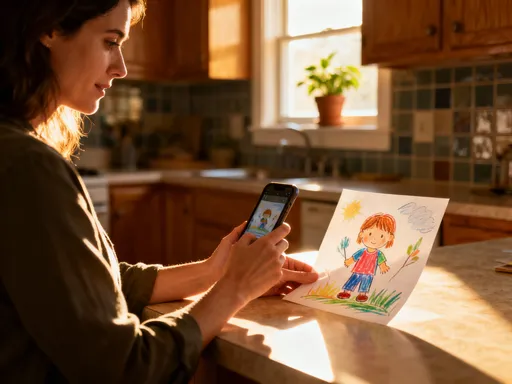
Here’s something unexpected: our family note app has become a quiet archive of love. It wasn’t designed for that. But over time, it collected moments. A photo of my daughter’s first attempt at pancakes—charred, lopsided, proudly presented with a note: “Made breakfast for you, Mom!” A message from my husband while on a business trip: “Miss our morning coffee. Back Thursday.” A saved list from last year’s Halloween: “Spider costume, candy, flashlight, tell Dad I’m scary.”
These aren’t tasks. They’re snapshots of us. And because the app is private—just our family—we don’t curate them. We don’t pose. We don’t filter. We just share. That authenticity makes them more meaningful. When I scroll back, I don’t see perfection. I see real life. I see us—trying, laughing, forgetting, reconnecting.
One evening, my daughter found an old grocery list. “Why did we buy three jars of peanut butter?” she asked, laughing. I remembered—it was during a power outage, and we thought we might be stuck at home for days. We ended up eating PB&J for breakfast, lunch, and dinner. It became a silly family story. She asked me to save that list as a “memory.” So now, it’s tagged with a star and the note: “The Great PB&J Storm of 2023.”
That’s the magic. The app wasn’t built to store memories, but it does—because it captures the rhythm of our days. And in that rhythm, we find connection. We see how much we’ve grown. How much we’ve shared. How much we’ve laughed through the chaos.
Unlike social media, this space isn’t about performance. It’s about presence. It’s where we say, “I thought of you,” without needing an audience. Where we celebrate small wins—“First A on a math test!”—without comparison. Where we leave traces of our love in the mundane. And one day, when our kids are grown, I hope they’ll look back and see not just a list of chores, but a story of being known, seen, and part of something steady.
Making It Work for Your Family’s Rhythm
No two families are the same—and your system shouldn’t be either. The goal isn’t to copy someone else’s setup. It’s to build one that fits your life, your personalities, your pace.
For visual learners, color-coding is a game-changer. We use blue for school, green for chores, red for appointments. At a glance, everyone knows what matters. For busy parents, voice memos are a lifeline. You don’t have to type—just speak. For teens with packed schedules, syncing the app with their personal calendar means they see everything in one place. No double-checking. No missed events.
But what if someone resists? Maybe your partner says, “I’m not tech-savvy.” Or your teen rolls their eyes at “another app.” That’s okay. Start small. Add just one thing—the weekly meal plan, or the grocery list. Invite, don’t demand. Show, don’t preach. Let them see how it helps before asking them to participate.
I had a friend whose mother refused to join at first. “I’ve used a paper calendar for 40 years,” she said. So they started simple: just one shared list for holiday shopping. Her daughter added gifts, checked them off as bought. Slowly, her mom began to peek. Then she started adding her own items. Now? She’s the one reminding others to update the list. The key was patience—and meeting her where she was.
And if tech feels overwhelming, focus on the human benefit. This isn’t about screens. It’s about connection. It’s about saying, “I want to make life easier for us.” When you frame it that way, resistance softens. People don’t care about features. They care about feeling supported.
So begin with one habit. One shared list. One small change. Let it grow naturally. Celebrate the wins—“We didn’t forget milk this week!”—and laugh at the misses. This isn’t about perfection. It’s about progress. About creating a system that helps your family breathe a little easier, every single day.
The Calm That Comes from Being Connected
In the end, it’s not about the app. It’s about what the app makes possible.
It’s the calm that settles in when you know your family is in sync. When you don’t have to chase details. When you can trust that the right people know the right things at the right time. That calm isn’t just convenient—it’s transformative.
It means you’re less overwhelmed. You’re not carrying the mental load alone. You’re not replaying conversations in your head, wondering if you missed something. You’re free to be present—really present—when your child tells you about their day, or when your partner shares a quiet moment over coffee.
It means your kids feel more secure. They know the plan. They know their role. They know they’re part of a team. That stability builds confidence. It tells them: “You belong. You matter. You’re counted on.”
And it means more space for connection. When logistics stop dominating your conversations, you start talking about other things. About dreams. About feelings. About the little joys. You replace “Did you do your homework?” with “What was the best part of your day?” That shift—from task management to emotional presence—is everything.
Technology often gets blamed for pulling us apart. But used wisely, it can do the opposite. It can create space for what matters most. It can help us feel more connected, not less. It can turn daily chaos into quiet harmony.
So yes, it’s just an app. But sometimes, the smallest tools make the biggest difference. Not because they’re flashy or complex, but because they help us show up—for our families, for ourselves, for the life we’re building together. And that? That’s not just easier. That’s richer. That’s the kind of life we all want—where we’re not just surviving the day, but truly living it, together.