I’ll just watch one tutorial" became a 2-hour spiral: How I learned to use video platforms without losing time
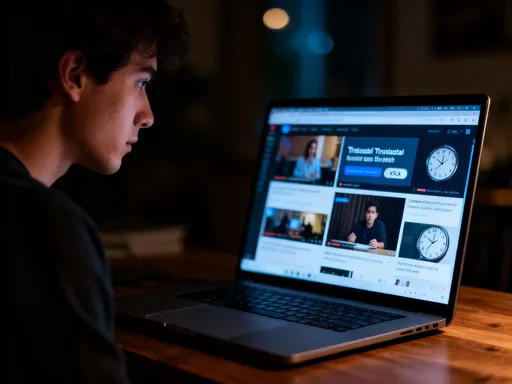
You’ve been there—searching for a quick fix, clicking "just one more" video, and suddenly it’s midnight. I’ve done it too. What felt like learning turned into mindless scrolling. What started as "how to organize my pantry" somehow led to DIY candle-making in Iceland, and then... cat yoga. Sound familiar? We’ve all promised ourselves we’d just watch one tutorial to solve a small problem—maybe a glitch in a spreadsheet, a recipe for dinner, or how to fold fitted sheets without crying. But instead of solving it, we fall into a digital whirlpool of suggestions, thumbnails, and autoplay. And before we know it, two hours are gone. No solution. Just fatigue. But here’s what I’ve learned: video tutorial platforms don’t have to drain your day. With the right habits, they can save time instead of stealing it. Let me show you how I turned chaotic browsing into focused, effective growth—without the guilt or exhaustion.
The Trap of "Just One More Video"
It starts so innocently. You’re standing in the kitchen, staring at a half-chopped onion, and you realize you forgot how to caramelize it properly. You grab your phone, search "how to caramelize onions," and click the first video. Ten minutes later, you’re watching someone build a tiny house from recycled pallets in Norway. How did that happen? You didn’t even like camping. This is the tutorial trap—what feels like productive learning becomes a stealthy time thief. I used to fall into this every night after the kids went to bed. I’d tell myself, "I’m just going to learn how to use Canva for my side hustle." One video leads to another, then another, and suddenly it’s 1 a.m., I’m bleary-eyed, and I still haven’t opened Canva. The worst part? I didn’t even feel rested the next day. Instead of feeling accomplished, I felt drained. I’d spent hours watching, but I hadn’t actually done anything. The emotional toll is real. It’s not just about lost time—it’s about the quiet guilt of knowing you could’ve been sleeping, reading, or just relaxing without the blue light buzzing in your face. And the cycle repeats: you promise tomorrow will be different, but the pattern holds because the system is designed to keep you watching. The autoplay button isn’t your friend. It’s a digital siren, luring you deeper into the scroll. The trap isn’t just the content—it’s the false comfort of feeling like you’re improving while actually going nowhere.
Why Video Learning Feels Productive (But Often Isn’t)
Here’s the uncomfortable truth: watching a tutorial feels like learning, but it’s not the same as doing. When I first started trying to learn basic website skills, I told myself I was being proactive. "I’m investing in myself," I’d say, as I clicked on "How to Build a WordPress Site in 20 Minutes." I watched five videos in a row. I felt smart. I could nod along, recognizing terms like "theme customization" and "plugins." But when I sat down to actually build my site? Nothing. I couldn’t remember where to start. I didn’t know how to install a theme. I was back at square one. That’s when it hit me: I wasn’t learning—I was just consuming. And there’s a big difference. The brain loves shortcuts. Watching a video gives you the illusion of competence. You see someone do something smoothly, and your brain says, "Oh, I could do that." But seeing isn’t doing. It’s like watching a cooking show and thinking you know how to make coq au vin. You might recognize the steps, but try it yourself, and you’ll probably burn the onions. Video platforms are designed to exploit this. They offer instant gratification—quick starts, satisfying edits, upbeat music. Each new video feels like progress. And the dopamine hits from clicking, watching, and scrolling keep you coming back. But real skill-building doesn’t happen in the watching. It happens in the trying, failing, adjusting, and trying again. I had to stop confusing familiarity with mastery. Just because I’d seen how to create a budget in Excel didn’t mean I could do it. Until I actually opened the program and started typing, I was just collecting mental bookmarks. And bookmarks don’t pay the bills.
The Hidden Time Cost of Poor Search Habits
One of the biggest time-wasters isn’t the videos themselves—it’s how we search for them. Early on, I’d type things like "how to get better at computers" or "easy home organization tips." Vague queries lead to vague results. The platform doesn’t know what you really want, so it throws a bunch of random videos at you. Some are helpful. Most aren’t. I’d click on one, realize it wasn’t what I needed, then click another, and another—each click stealing two, three, five minutes. Multiply that by ten videos, and you’ve lost an hour. I didn’t even notice it happening. What changed? I started being specific. Instead of "how to use email better," I’d search "how to create email folders in Gmail on iPhone." That one small shift made a huge difference. Suddenly, the results were relevant. I found what I needed in the first two videos, not the tenth. I also started using filters—sorting by upload date so I got current tutorials (because nothing’s more frustrating than following steps that don’t work anymore) and filtering by duration. If I only had ten minutes, I’d set the filter to "under 10 minutes" so I wouldn’t accidentally click a 25-minute deep dive on email history. Another game-changer: the two-minute rule. Before I click any video, I give myself two minutes to read the title, check the description, and scan the comments. Are people saying it’s helpful? Does it actually cover what I need? If not, I don’t click. This simple pause cuts out so much wasted time. I used to think speed was the goal—find and play fast. But precision is better than speed. It’s like going to the grocery store with a list versus wandering the aisles hoping inspiration strikes. One gets you home with dinner. The other gets you eating gummy worms at 9 p.m. while wondering where the hour went.
Setting a Learning Goal Before Hitting Play
Now, before I even open a video platform, I ask myself one question: What do I want to be able to do in 20 minutes? That’s it. This tiny mental shift changed everything. Instead of passively absorbing information, I’m solving a real problem. For example, instead of "watching videos about Google Drive," my goal became "create a folder system for my freelance client files by 8 p.m. tonight." That’s specific. It’s actionable. It has a deadline. When I search with that goal in mind, I find exactly what I need. And when the video ends, I know whether I succeeded—because I either have a folder system or I don’t. This turns learning into a mission, not a distraction. I’ve also learned to ignore videos that don’t align with my goal, no matter how tempting the thumbnail. Just because a video is labeled "10 Life-Changing Google Tips" doesn’t mean tip #7 is relevant to me. In fact, it probably isn’t. Staying focused means saying no to everything that doesn’t serve your immediate need. I’ve even started writing my goal on a sticky note and putting it next to my laptop. It sounds silly, but it works. When the autoplay suggestion pops up for "How to Train Your Dog to Skateboard," I glance at the note and remember: "I’m organizing files." That little piece of paper is my anchor. It keeps me from drifting. And the best part? I feel accomplished. Not because I watched a lot, but because I did something. I solved a problem. That’s real progress. It’s not flashy, but it’s sustainable. And over time, those small wins add up to big changes. I’m not just learning—I’m building a more functional, less stressful life, one clear goal at a time.
Building a Watchlist, Not a Rabbit Hole
Here’s a secret: I almost never watch a tutorial the moment I find it. Instead, I save it to a playlist. This one habit has saved me hours. Before, I’d see a video titled "5-Minute Dinners for Busy Moms," click it immediately, and end up watching three other videos about meal prep containers, sous vide cooking, and Japanese bento boxes—none of which I needed. Now, I click "Save," choose a playlist like "Quick Family Meals" or "Website Fixes," and close the tab. Later, when I have 30 minutes blocked off for learning, I go to that playlist and watch just what’s there. No surprises. No detours. It’s like meal prepping for your brain. I batch my learning, just like I batch my cooking. And I set limits: one goal, two videos max per session. That forces me to stay focused. If my goal is "learn to use mail merge in Gmail," I watch two videos on that topic, then stop. Even if I see a suggestion for "How to Design a Newsletter in Canva," I don’t click. I save it for later—if it’s still relevant. This method turns random browsing into intentional growth. It also reduces decision fatigue. I’m not constantly asking, "What should I watch next?" I already decided—when I was in a calm, clear-headed moment. I’ve created playlists for everything: "Fix My Printer," "Learn Basic Photo Editing," "Organize My Calendar." Each one has a purpose. And when I finish a playlist, I feel a sense of closure. It’s not endless. It’s finite. That makes it manageable. I’ve even shared some of my playlists with friends. We’ll say, "Let’s both work on meal planning this week," and exchange links. It adds a little accountability and makes learning feel less lonely. We’re not just watching—we’re growing together, on purpose.
From Watching to Doing: The 5-Minute Rule
The real magic doesn’t happen in the video. It happens in the five minutes after it ends. That’s when I apply what I learned—immediately. My rule is simple: within five minutes of finishing a tutorial, I do something with the information. Even if it’s small. Even if it takes two minutes. If I just watched how to create a budget spreadsheet, I open Excel and start typing. If I learned how to resize photos, I find one on my phone and resize it. If the video was about meal prep, I pull out containers and label three of them. This immediate action does two things: it reinforces the learning, and it turns knowledge into habit. Our brains remember what we do much better than what we see. This is called active recall, and it’s one of the most effective ways to retain information. But more than that, it builds momentum. When you act right away, you prove to yourself that you can do it. That tiny win builds confidence. And confidence makes you more likely to keep going. I used to wait—"I’ll try it tomorrow," I’d say. But tomorrow rarely came. Or if it did, I’d forgotten the steps. Now, I treat the video as a recipe, not a show. I watch it once, then I cook. And if I mess up? That’s fine. I learn more from the mistake than I did from the video. The 5-minute rule also prevents the "I’ll do it later" trap, which is just another form of procrastination. By acting fast, I close the loop. I don’t leave the task hanging in my mind. It’s done. Checked off. And that feels good. It’s a small ritual, but it’s powerful. It turns passive consumption into active creation. And over time, those small actions add up to real skills. I’m not just watching tutorials—I’m living them.
Making Tutorials Work for Your Life, Not Against It
Looking back, I can see how much has changed. Video platforms used to feel like a guilty pleasure—something I did when I was too tired to do anything else, only to feel more exhausted afterward. Now, they’re a tool. A helpful, intentional part of my routine. I don’t watch less—I watch smarter. I’ve learned more in the past six months than I did in the previous two years of random browsing. And I’ve reclaimed hours—hours I now spend with my family, reading, or just being still. The shift wasn’t about discipline. It was about design. I redesigned how I use these platforms to fit my life, not disrupt it. I set goals. I save videos. I act quickly. I stay focused. And because of that, I feel more in control. Less scattered. More capable. The truth is, technology isn’t the problem. It’s how we use it. Video tutorials can be a force for good—they can teach us to cook, organize, create, and grow. But only if we use them with purpose. The goal isn’t to stop watching. It’s to watch with intention. To learn what we need, when we need it, and then move on. Because real growth doesn’t come from endless videos. It comes from focused, purposeful action that fits your life. So next time you reach for your phone, ask yourself: What do I want to do today? Find the video that helps. Watch it. Then close the tab and try it. That’s how you turn "just one more video" into real progress. That’s how you make technology work for you—not against you. And that, my friend, is a win worth celebrating.